Featured Speakers & Panelists

Liz Barry
Liz Barry is the Executive Director of Metagov. Before joining Metagov, she served as Head of Partnerships at The Computational Democracy Project, the 501(c)3 organization she established with the creators of the Polis technology to steward its open source code and methods. Liz works with facilitators, social movements, civil society organizations, journalists, indigenous nations, democratic governments both young and old, and peacebuilders to implement “listening at scale.” The collaboration began when her presence at Taiwan’s 2014 Sunflower Revolution and subsequent relationship with g0v led to her writing up the first coverage of vTaiwan in the west, in the 2016 piece for Civicist titled “vTaiwan: Public Participation Methods on the Cyberpunk Frontier of Democracy,” now republished by Taiwan’s government.
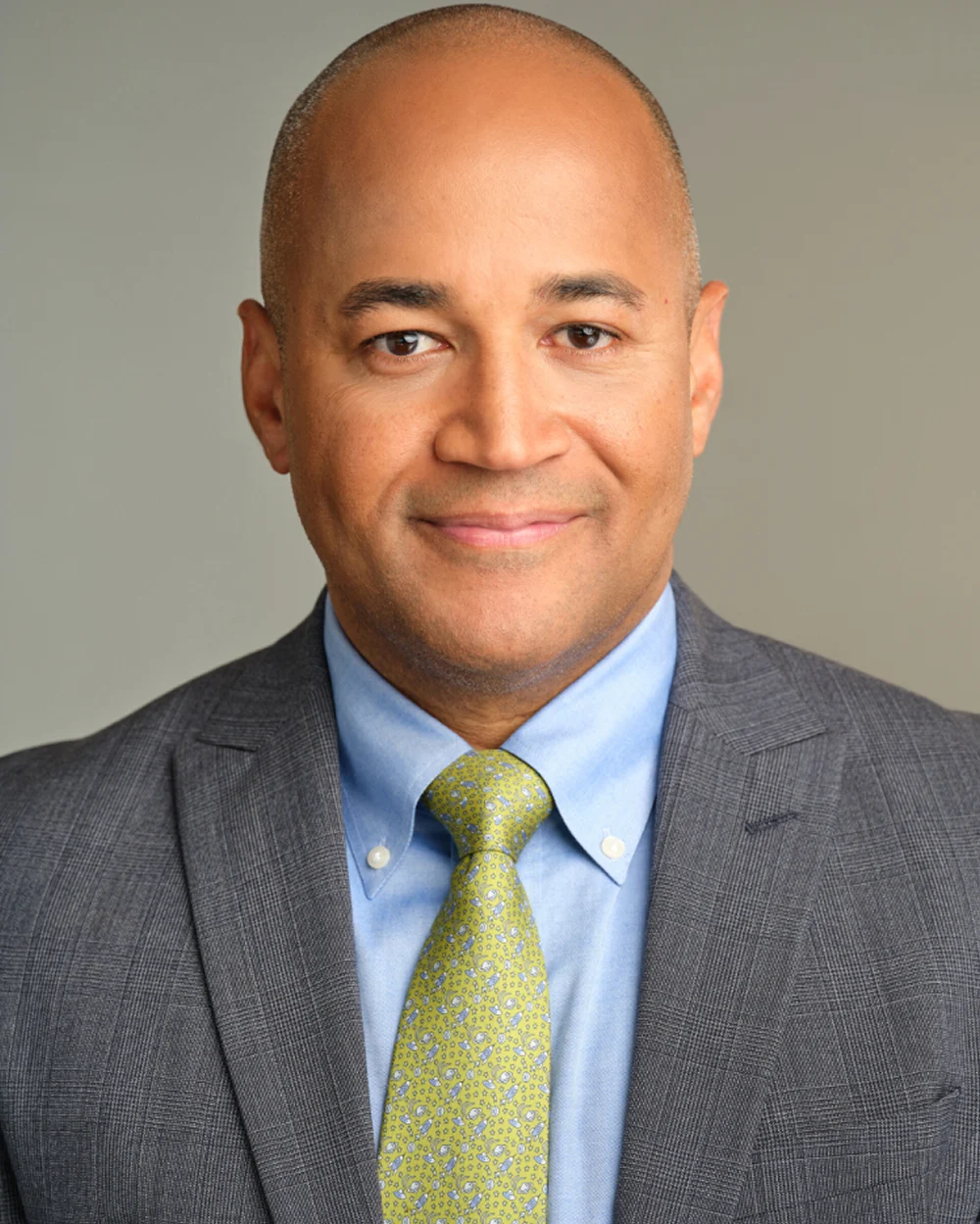
Dante Disparte
Dante leads global growth and regulatory strategy, public policy, market expansion, international operations and communications. He is a key strategic leader building our business, forging government relations and taking us into new markets. He brings decades of experience working in complex global financial and risk issues and most recently served as a founder of the Diem Association.

Christy Goldsmith Romero
Christy Goldsmith Romero is a Distinguished Visitor from Practice at Georgetown University Law Center, where she teaches Corporations and a course she designed Emerging Technology in Financial Services. She is also a Senior Fellow at the Atlantic Council. She has more than 20 years of experience as a career federal attorney and leader, serving four Presidents at the CFTC, Treasury, and the SEC. In June 2024, President Biden nominated her to be the FDIC Chairman and Board member. She served as a CFTC Commissioner from 2022 to May 31, 2025, nominated by President Biden and unanimously confirmed by the Senate. As the sponsor of the CFTC’s Technology Advisory Committee, she focused on the future of finance. TAC examined emerging technology (AI, fintech, digital assets, and blockchain), and cybersecurity through its experts in those fields. TAC released reports on Decentralized Finance as well as Responsible AI in Financial Markets. She also led the drafting of the CFTC’s first proposed cyber resilience rule for banks and brokers. She served for 12 years at the Department of Treasury, including for a decade as the Special Inspector General for TARP (SIGTARP), after President Obama’s nomination and Senate’s unanimous confirmation in 2012. There, she led a nationwide law enforcement and audit watchdog office that conducted oversight over the TARP bailout that covered banks, derivatives, housing, autos and insurance. She worked to strengthen the financial system. SIGTARP developed a unique ability to uncover hidden fraud in banks. SIGTARP’s investigations resulted in the recovery of more than $11 billion, civil charges against large financial institutions, and criminal charges against 465 individuals (with courts sentencing to prison 75 bankers and nearly 100 bank borrowers). She also served on a Council of IGs overseeing FSOC. From 2019 to 2021, she was an adjunct professor at Georgetown University Law Center and the University of Virginia Law School (2020), teaching courses in securities regulation, cryptocurrency regulation, and federal oversight. She served for six years (2003—2009) at the SEC, including as counsel to two SEC Chairs, Christopher Cox (R) and Mary Schapiro (I), during the financial crisis, after serving in the Enforcement Division. She earned her law degree from BYU Law School and her undergraduate degree from Old Dominion University. Her work and publications have received substantial media coverage. She is a native of Virginia Beach, a Filipino-American, and is a mom, grandma and wife.

Houman Haddad
Houman Haddad is the Head of Emerging Technologies at the United Nations World Food Program (WFP). Houman is the founder of WFP’s “Building Blocks” (BB) project, which seeks to harness the power of blockchain to foster interagency collaboration and create efficiencies. Building Blocks is the world’s largest implementation of blockchain technology for humanitarian assistance, currently serving 700,000 Syrian and Rohingya refugees in Jordan and Bangladesh. Blockchain technology also has the potential to empower the vulnerable through financial inclusion and digital identities. Houman joined WFP in 2010 and, prior to WFP, worked in Canada’s banking sector.

Ron Hammond
Ron Hammond is the Head of Policy and Advocacy at Wintermute, a UK-based prop trading firm. Ron is leading Wintermute’s US expansion in New York and brings nearly a decade of regulatory experience to his new role, having previously served as the Senior Director of Government Relations and Institutional Engagement at the Blockchain Association, a DC-based crypto trade association. His background also includes positions at Ripple as their in-house lobbyist and as Financial Services Policy Lead for Congressman Warren Davidson of Ohio, where he crafted the first bipartisan market structure bill known as the Token Taxonomy Act.

Erin Kissane

Omid Malekan
Omid Malekan is an adjunct assistant professor at Columbia Business School. As the self-described “Explainer-in-Chief” of crypto, he has lectured about it since 2019. He has also written several books, multiple articles, and too many blog posts, often exploring the frontiers of blockchain technology and how they might transform different activities. He consultants for startups and Fortune 500 companies.

Mike Masnick
Mike Masnick is the founder & editor of the popular Techdirt blog, which explores the intersection of innovation, policy, law, civil liberties, and economics. He is also the founder of the Silicon Valley think tank, the Copia Institute and a board member at Bluesky, the decentralized social media network. Described by the NY Times as “something of a Silicon Valley oracle,” he wrote the influential Protocols, Not Platforms paper as well as co-authored the Resonant Computing Manifesto.

Sujith Nair
Sujith is the co-founder of Networks for Humanity (NFH) and co-creator of Beckn, a decentralized protocol designed to enable peer-to-peer, agent-native digital economies. He also led the global Digital Energy Grid (DEG) vision in collaboration with the International Energy Agency (IEA), aiming to build an interoperable digital backbone for clean and flexible power systems. His work spans several major Digital Public Infrastructure (DPI) pillars, including marketplaces, where he co-conceptualized ONDC and led initiatives like Namma Yatri and the Kenya One Network; identity and mobility, where he contributed to the Aadhaar project by designing de-duplication infrastructure for 1.4 billion residents and pioneered India’s National Common Mobility Card; and energy governance, where he serves as a task force member for the India Energy Stack, co-architected the Unified Bharat e-Charge initiative alongside NBSl and the Ministry of Heavy Industries, and contributes to shaping frameworks for a unified, AI-driven energy economy as a special invitee to the Forum of Regulators.

Mallesh Pai
Mallesh Pai is a researcher at Tempo Labs and the Lay Family Chair Professor of Economics at Rice University. His research interests are in game theory and mechanism design, and their applications to the design of blockchains and decentralized finance (DeFi) protocols. He has also worked on the economics of privacy, social networks/ social learning and statistical decision theory.

Danny Ryan