


DeCenter Workshop: New Applications for Blockchain in Energy + Environment
Overview: Blockchains offer a new class of global coordination mechanisms with potential to help crises in energy production and climate change. These frontiers will be the focus of a one-day event co-organized by the Princeton Center for the Decentralization of Power Through Blockchain Technology (DeCenter) and the Andlinger Center for Energy and the Environment. Those interested in consideration may direct letters of inquiry to decenter@princeton.edu.
Prospect House & Garden
Washington St, Princeton, NJ 08544
Program
Wednesday, April 29
8:30 am
9:00 am
Breakfast and Registration
9:00 am
9:10 am
Welcome Remarks
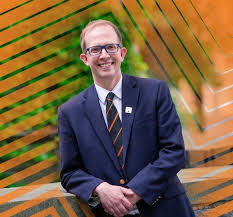
Andrew Houck, Dean, Princeton University School of Engineering and Applied Science
9:10 am
9:30 am
Welcome and Historical Interlude
This session examines the histories of the electric grid and the insurance industry through the lens of financial and technological innovation. From early experiments in business model design—risk pooling, declining marginal prices—to the modern era of internet-enabled risk intermediation, both electricity and actuarial infrastructures continue to evolve in real time. The discussion will also trace a recurring theme in technological revolutions: the waves of speculation and fraud that often accompany the birth of new financial and communications paradigms.

Mike Maizels, Executive Director, DeCenter, Princeton University

Brendan Greeley, PhD Candidate, Princeton University Department of History
9:30 am
10:00 am
Distributed Ledgers & Peer to Peer Infrastructure: An Operator’s Guide to the Future
This panel offers an operator’s perspective on decentralized finance (DeFi) and decentralized physical infrastructure networks (DePIN), level setting on how these technologies work, what it takes to run them in practice, and how they can power socially and environmentally beneficial outcomes in future applications in subsequent sessions.

Dylan Bane, Sr. Enterprise Research Analyst, Messari
Moderator
Ranvir Rana, Co-Founder, Kaleidoscope Blockchain

Mark Ballandies, Co-Founder, Onocoy

Chris Denaro, Chief Operating Officer, Glow
10:00 am
10:15 am
Coffee Break
Compute, Energy & the Environment
10:15 am
10:30 am
Beyond Power: Hidden Impacts of High-Performance Computing
This session explores the often-overlooked environmental and social externalities of high-performance computing—impacts like groundwater use and contamination, noise and vibration, e-waste, and air pollution from cooling systems and supporting infrastructure. The discussion will highlight how innovation in computing and data infrastructure must grapple with these constraints if it is to be sustainable, equitable, and resilient.
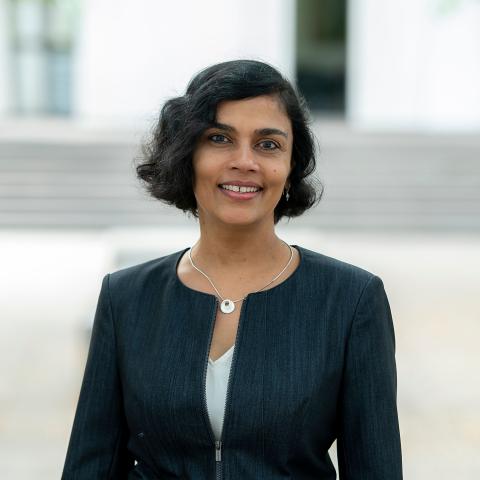
Smita Brunnermeier, Senior Lecturer of Economics and Public and International Affairs, Princeton School of Public and International Affairs
10:30 am
11:15 am
The New Load: Data Centers and the Future of the Grid
This session examines the unprecedented surge in electricity demand driven by large-scale data centers, AI infrastructure, and high-performance computing. After years of stagnant consumption, new loads are arriving just as aging generation assets retire and grid capacity tightens. Using Texas as a case study, the discussion will explore how regional market design, renewable integration, and investment incentives are being tested by this return of real, physical demand—and what it reveals about the future of energy systems in the age of digital abundance.

Ronnie Sircar, Eugene Higgins Professor of Operations Research and Financial Engineering, Princeton University

Keith Collins, Vice President of Commercial Operations, ERCOT

Meltem Demirors, Founder and General Partner, Crucible Capital

Guy Woullet, General Partner, Andreesen Horowitz
11:15 am
11:35 am
Decentralized Infrastructure & Renewable Power: Theory into Practice
This session examines DePIN—decentralized physical infrastructure networks that use blockchain to coordinate real-world assets without centralized control. Focusing on solar energy, the discussion introduces a “first-principles” framework that models pooled renewable generation through the lens of modern portfolio theory. The presenter will share early findings and moderate a conversation with a research lead from Glow, an Ethereum-based solar network recently backed by major investors to scale its capacity from 5 MW toward 600 MW. Together they’ll consider how token incentives and decentralized coordination can transform renewable deployment and risk management.

Kyle Onghai, PhD Candidate, Princeton University Department of Operations Research and Financial Engineering

Vik Kalghatgi, Chief Scientist, Glow International
11:35 am
12:40 pm
Lunch
DeFi & Useful Market Making
12:40 pm
1:00 pm
Blockchain and Permissionless Energy Markets
This session introduces the concept of the automated market maker (AMM)—a blockchain-based coordination mechanism that replaces the traditional order book when counterparties are difficult to match. While AMMs today underpin much of decentralized coin trading, their design principles have far broader implications.
We will examine how tokenized “parametric outcomes” can enable new forms of risk intermediation, particularly in the energy and insurance sectors. One case study will explore the use of AMMs to provide accessible electricity price-shock hedging to any participant, setting the stage for afternoon sessions that delve into smart contract mechanics and other actuarial applications.
Pre-reading material: Fabi et al, “Automated Market Making for Energy Sharing”

Viraj Nadkarni, PhD Candidate, Princeton University

Matheus V. X. Ferreira, Assistant Professor of Computer Science, University of Virginia

Michele Fabi, at the Department of Economics and Social Sciences, Télécom Paris
1:00 pm
1:20 pm
Bootstrapping Clean Molecule Markets
This session explores how blockchain coordination can help establish early markets for clean molecules—from near-term industrial inputs like low-carbon ethylene to emerging fuels such as green hydrogen and synthetic marine fuel. The discussion will examine how on-chain tools, including pre-commitment contracts and tokenized offtake agreements, can align large buyers and sellers before full market maturity. By enabling transparent, verifiable demand signals, these mechanisms may help overcome the “chicken-and-egg” problem that often stalls the scaling of new energy commodities.
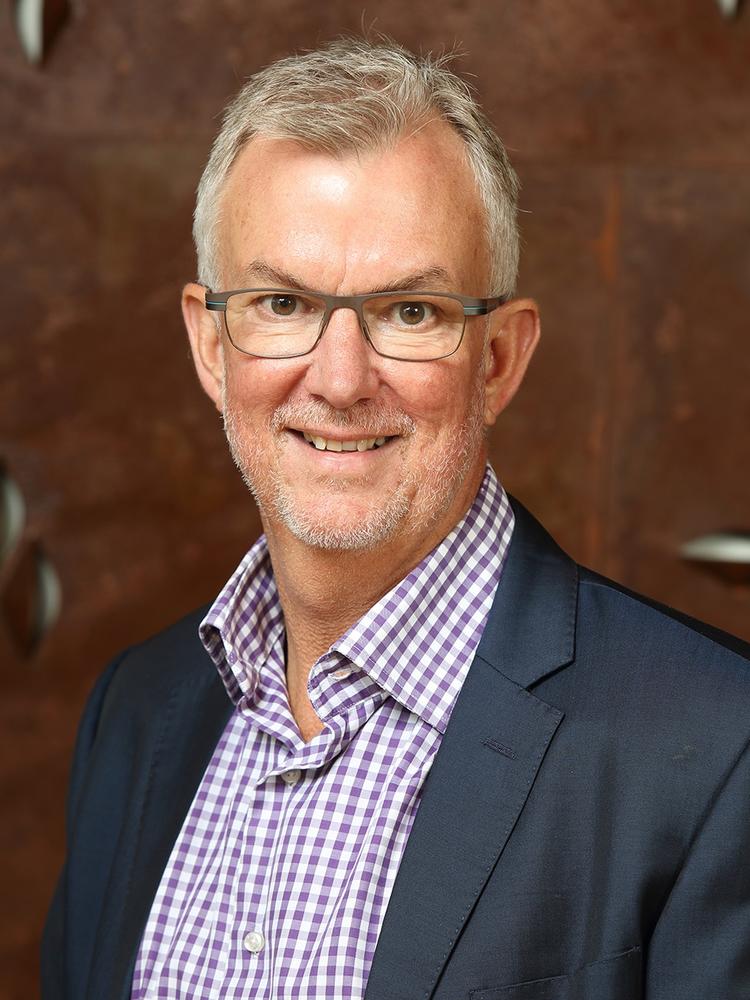
Chris Greig, Senior Research Scientist, Andlinger Center for Energy and the Environment

Catrina Wang, General Partner, Portal Ventures
1:20 pm
2:00 pm
AMMs and Peer to Peer Weather Disaster Insurance
This presentation dives into the potential of using blockchain to provide insurance products—such as monsoon protection for small-holding farmers—in places where traditional coverage remains scarce amid escalating climate risk. The session will explore how automated market makers could interface with actuarial and meteorological systems to dynamically price and distribute risk, translating complex forecasts into accessible, on-chain instruments.

Gordon Grant, Principal, ChiSquared Technologies
Mike Kriak, CEO, Consensys Mesh
2:10 pm
2:25 pm
Coffee Break
Building the Future with Decentralized Environmental Systems
2:25 pm
2:50 pm
Decentralized Measurement & Development Innovation
This panel explores how emerging decentralized physical infrastructure networks might transform environmental and development outcomes. This high-level panel will discuss how community-linked monitoring and incentive structures—such as bonds tied to measurable on-the-ground impact—can improve transparency, empower local stakeholders, and align investment with real results in areas like clean water access.
Mike Maizels, Executive Director, DeCenter, Princeton University
Moderator
Christopher Blair, Assistant Professor of Politics, Princeton University

Stephen Porter, Senior Outcomes Specialist, The World Bank Group

Joni Bloch, Implementation Partner, BLCK IOT
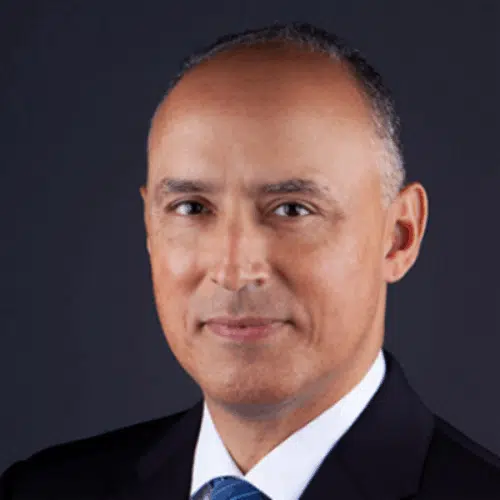
Darius Nassiry, Vice President, Climate Change, WSP
2:50 pm
3:10 pm
DePIN & Environmental Sensing: From the Lab to the World
A forward-looking conversation on how decentralized infrastructure models could accelerate the rollout of next-generation sensor networks—from precision agriculture and environmental monitoring to deep-ocean and atmospheric observation. This session examines how token incentives, open data markets, and collaborative governance might help bridge the long-standing divide between research-grade instrumentation and commercially scalable systems, highlighting both the technical challenges and the emerging opportunities for sustainable sensor economies.
Dylan Bane, Sr. Enterprise Research Analyst, Messari

Olivia Walbert, Postdoctoral Research Associate, Global Geophysics, Princeton University

Mark Zondlo, Professor of Civil and Environmental Engineering, Princeton University

Ajit Subramaniam, Lamont Research Professor at the Lamont Doherty Earth Observatory, Columbia University
3:10 am
3:25 pm
Coffee break
3:25 pm
4:00 pm
Where We Go From Here
This interactive synthesis session will pressure-test the most promising ideas surfaced throughout the convening and explore practical pathways forward. Participants will identify policy, financing, and implementation priorities, stress-test assumptions, and refine actionable concepts. The session will also lay the groundwork for ongoing collaboration, including the formation of working groups to advance a policy precept and support a potential follow-on gathering in Washington, DC or on the Princeton campus in spring 2028.
4:00 pm
5:00 pm
Reception
Sally Frank Café (lower level of Prospect House)
Organizers

Vivian Fuhrman

Madelyn LaBuda